AI Overviews, ChatGPT and other AI powered search tools have changed how people find answers and a lot of writers have started asking whether SEO strategies even matter anymore. The truth is the fundamentals haven’t disappeared. They’ve just gotten stricter. The SEO strategies that still work today are the ones built on real intent matching, genuine expertise, and content that actually helps the reader, not the ones stuffed with keywords.
I’m still relatively new to SEO myself. I’ve spent the several months building practical hands on experience running keyword research optimizing on page elements and testing what actually moves the needle on a practice website rather than just reading about it. That still learning position turned out to be useful because it forced me to test basic strategies from scratch instead of assuming what used to work would automatically keep working.
Here’s what I’ve found and what I think anyone starting with SEO strategies for AI search should know.
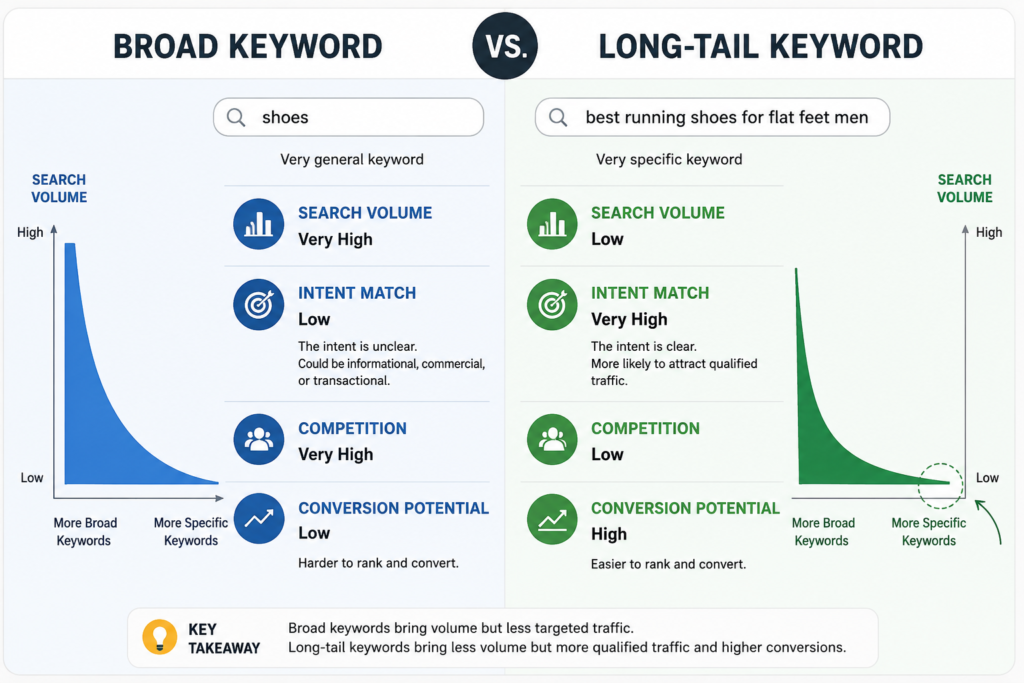
Long Tail Keywords Still Outperform Broad Ones
One of the things I tested was optimizing a practice website around specific long-tail keywords instead of broad high-competition terms. I rewrote the title tags, headings, and body content so they matched what someone searching that phrase actually wanted to find.
The result visibility and more impressions than when the pages targeted broader generic keywords.
This matters more with AI search. AI Overviews and chatbots tend to pull from content that answers a question clearly, not content that vaguely covers a big topic. If your page is built around SEO strategies for AI search, or just SEO, you’re speaking the same language the AI is trying to match to a specific query.
Takeaway: Don’t chase the keyword in your niche. Chase the one that matches what your reader is trying to solve.
The Keyword Density Mistake I Made Early On
When I was first learning on page SEO I made a mistake a lot of beginners make: I focused too much on keyword density and tried to work my target keyword into nearly every sentence. It read awkwardly. It didn’t actually help rankings the way I expected.
What worked better was shifting focus to search intent and natural language, using the keyword where it made sense and letting related terms and synonyms fill in the rest. Content that reads naturally and actually answers the question tends to perform better than content that’s technically optimized but uncomfortable to read.
This is one of the shifts AI search has accelerated. AI systems are. Paraphrasing content which means unnatural keyword stuffed writing doesn’t just hurt readability it makes your content harder for an AI model to accurately summarize and cite in the first place.
Old SEO vs. SEO Strategies for AI Search
. Focus Area Traditional SEO SEO Strategies for AI Search
. Keyword approach: Density and repetition; Natural intent matching
. Content goal: Rank in the 10 blue links. Get cited, summarized directly.
. Authority signal: Backlinks alone; backlinks plus demonstrated experience (EEAT)
. Structure Long form keyword heavy Clear answers scannable sections
. Success Rankings Rankings plus visibility in AI answers
. Traditional SEO isn’t obsolete; it’s the foundation. But SEO strategies for AI search add a layer on top; your content now has to be clear and trustworthy enough that an AI model is comfortable summarizing it as a source.
. Tools Worth Learning First (From Someone Learning Them)
I’ve mainly worked hands-on with:
Google Search Console for tracking real search performance and impressions
Google Keyword Planner for keyword volume and ideas
Uber suggest for broader keyword and content research
Answer The Public for finding the actual questions people are asking.
If you’re just starting Google Search Console is the one I’d recommend first. It’s free. It shows you exactly how your own website is actually performing in Google Search not estimated data but real impressions clicks and queries. That direct feedback loop is what taught me more about keyword intent than any guide
How SEO Needs to Adapt for AI Search
Based on what I’ve seen so far, SEO strategies for AI search need to lean harder into three things:
. Clear direct answers. AI Overviews tend to pull content that answers a question early in the page not buried under three paragraphs of introduction.
. Demonstrated expertise and experience. Generic surface-level content is easy for AI systems and readers to spot. Examples, specific numbers, and firsthand lessons stand out.
. Topical authority. Covering a subject across multiple related pages signals more trustworthiness than one isolated post trying to rank for everything at once.
. Traditional SEO strategies solid on page optimization keyword use quality backlinks are still the base layer. What’s changed is that credibility and clarity now carry weight because AI search is actively deciding whether your content is trustworthy enough to summarize and pass along to the reader.
FAQ
Do SEO strategies still work after AI search? Yes. Core SEO strategies keyword research on page optimization quality content backlinks still work. AI search has raised the bar on clarity, intent matching, and demonstrated expertise. It hasn’t replaced the fundamentals.
What’s the biggest SEO mistake beginners make? Overloading content with keywords or focusing on search intent. Natural helpful writing that matches what the reader is actually looking for tends to outperform keyword stuffed content.
What’s the free tool to start learning SEO with? Google Search Console. It shows performance data for your own site, which makes it easier to understand what’s actually working.
SEO strategies for AI search aren’t a different discipline they’re the same fundamentals applied with more precision. Long tail intent matched keywords still outperform ones. Natural writing still beats keyword stuffing. Tools, like Google Search Console still give the clearest picture of whats actually working.
If you’re just starting the, shift to make is this: stop optimizing for the algorithm and start optimizing for the person or AI trying to find a clear, trustworthy answer. That’s the strategy that keeps working no matter how search itself changes.
Conclusion
Search is changing, but the basics of creating useful and trustworthy content remain important. For a digital marketer in thrissur, focusing on clear answers, natural language, relevant keywords, real experience, and strong topic coverage can help content stay visible across both traditional search engines and AI-powered platforms. Instead of trying to write only for algorithms, digital marketers should focus on understanding what people need and providing accurate answers in a simple and useful way. As search continues to evolve, content that genuinely helps the reader is more likely to remain valuable and discoverable.